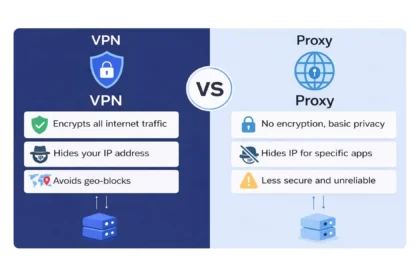

Yes, free VPNs are available, and many people in the United States use them for basic online privacy needs.
However, a free VPN always comes with limitations that users should understand before installing one. Concerns around data privacy, public WiFi security, and access to streaming platforms make this decision especially important for US users.
This guide explains whether a VPN is available for free, how free VPNs work, what restrictions they come with, and when they are safe to use. By the end, you will have a clear and honest understanding of whether a free VPN is the right choice for your situation.
What Is a Free VPN and How Does It Work?
A free VPN is a virtual private network service that allows users to hide their IP address and encrypt their internet traffic without paying a subscription fee. It creates a secure tunnel between your device and the internet, helping protect your data from hackers, internet service providers, and unsecured networks.
When you connect to a free VPN, your online traffic is routed through the VPN provider’s servers before reaching the website or app you are using. This process masks your real location and adds a layer of encryption. While the core function is similar to paid services, free VPNs usually operate with limited features, fewer servers, and lower performance compared to premium options.
Related Topic: What Is a VPN?
Are Free VPNs Really Free?
At first glance, a free VPN sounds like an easy and cost-effective way to stay private online. In reality, most free VPN services operate with trade-offs that users may not immediately notice. While you may not pay with money, you often pay with reduced performance, limited features, or data restrictions.
Understanding how free VPNs sustain their operations helps set realistic expectations. These services still need infrastructure, servers, and maintenance, which means they must generate revenue in other ways.
How Free VPN Providers Make Money
Free VPN providers typically rely on alternative business models to cover their costs. Some display advertisements within their apps, while others encourage users to upgrade to a paid version by restricting key features. In many cases, free plans act as a trial layer rather than a complete solution.
Another common approach involves limiting access to advanced security tools, faster servers, or customer support. These restrictions are designed to push users toward premium plans without forcing them upfront.
Common Limitations of Free VPNs
Most free VPN services come with built-in restrictions that affect everyday usability. Speed throttling is common, especially during peak hours, which can slow down browsing and downloads. Server availability is also limited, with fewer locations and crowded US servers.
Daily or monthly data caps are another major concern. Once the limit is reached, access may be paused or speeds significantly reduced. These free VPN limitations make them suitable only for light, occasional use rather than continuous protection.
Is It Legal to Use a Free VPN in the USA?
Yes, using a VPN is legal in the United States, including free VPN services. There are no federal laws that prohibit individuals from using a VPN to protect their online privacy or secure their internet connection. Many people in the US use VPNs for legitimate purposes such as securing public WiFi, remote work, or private browsing.
However, legality depends on how the VPN is used. While the tool itself is legal, any illegal activity carried out through a VPN remains illegal. This distinction is important for users who assume a VPN provides immunity from the law.
Using a free VPN on public WiFi networks, hotels, airports, or cafes is generally acceptable and common. Some workplaces or schools may restrict VPN usage through internal policies, but this does not change the legal status of VPNs nationwide. As long as it is used responsibly, a free VPN legal in USA terms is not a concern for most users.
Are Free VPNs Safe to Use?
Safety is one of the biggest concerns when people consider using a free VPN. While these services do provide basic encryption, their overall safety depends on how they handle user data, security practices, and transparency. Not all free VPNs follow the same standards, which is why users should remain cautious.
Free VPNs are generally suitable for low-risk activities, but they are not designed to offer the same level of protection as paid services. Understanding the potential risks helps users make informed decisions instead of relying on assumptions.
Privacy Risks with Free VPNs
One of the main concerns with free VPNs is how user data is handled. Some services may keep activity logs, connection timestamps, or IP information, which can weaken privacy. In certain cases, privacy policies are unclear or difficult to understand, making it hard for users to know what data is being collected.
This is why many users ask whether are free VPNs safe in the USA. While they are legal to use, the level of privacy protection varies widely depending on the provider’s policies and infrastructure.
Security and Data Protection Concerns
Beyond privacy, security practices also differ among free VPN providers. Weak encryption standards, outdated software, or limited server maintenance can expose users to vulnerabilities. Some free VPN apps may request excessive permissions, increasing the risk of tracking or misuse.
There is also the potential for malware or intrusive trackers bundled with poorly maintained apps. These risks highlight the importance of using free VPNs only for basic browsing and avoiding them for sensitive activities.
Related Topic: Can the FBI track a VPN?
When Does Using a Free VPN Make Sense?
Despite their limitations, free VPNs can still be useful in specific, low-risk situations. When used with realistic expectations, they can provide basic privacy protection without any financial commitment. The key is understanding where a free VPN adds value and where it falls short.
One common use case is connecting to public WiFi networks in places like cafes, airports, or hotels. In these environments, a free vpn for public wifi usa can help encrypt your connection and reduce the risk of data interception during light browsing.
Free VPNs may also make sense for short-term IP masking, such as accessing websites securely while traveling or checking information on unsecured networks. For users who only need occasional protection and are not handling sensitive data, a free VPN can serve as a temporary solution rather than a long-term privacy tool.
When You Should NOT Use a Free VPN
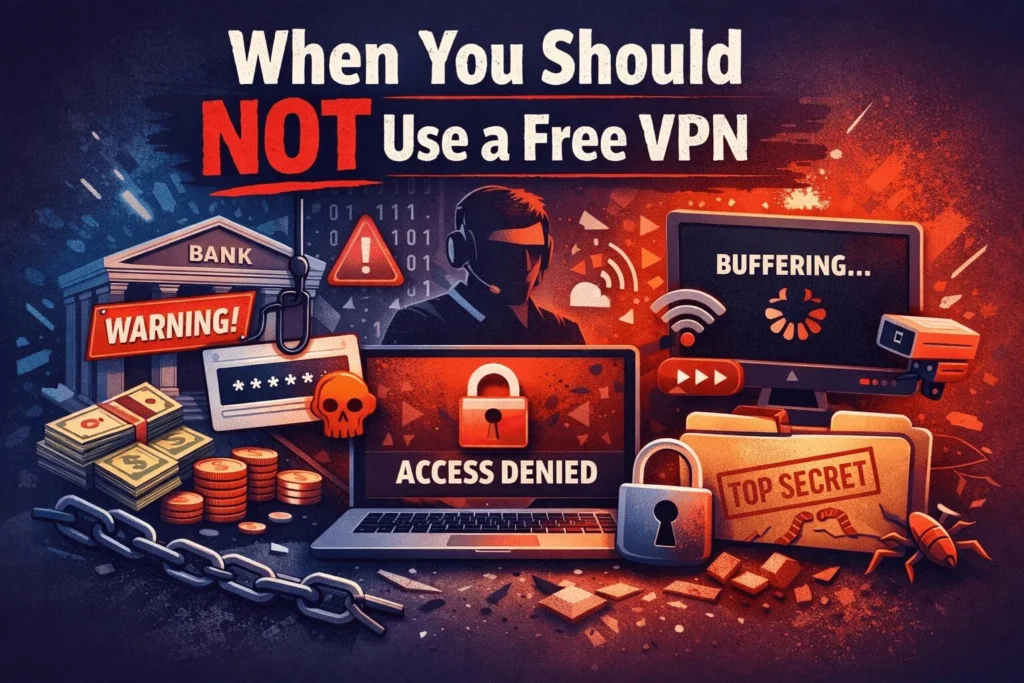
There are situations where using a free VPN is not recommended due to higher security and privacy risks. These services are not designed to handle sensitive activities that require strong protection, reliability, and consistent performance.
- Online banking and financial transactions
Free VPNs should be avoided for banking, payments, or accessing financial accounts. Limited encryption standards, unclear logging practices, and shared servers increase the risk of data exposure during sensitive transactions. - Work-from-home and corporate systems
Free VPNs are not suitable for remote work or accessing company networks. Most organizations require secure, stable, and compliant connections that free VPN services cannot reliably provide. - Streaming and high-bandwidth activities
Many free VPNs struggle with streaming platforms due to bandwidth limits, slow speeds, and blocked servers. This makes them ineffective for consistent media access or downloads. - Handling sensitive personal or business data
If you are dealing with confidential documents, private credentials, or business communications, relying on a free VPN can create unnecessary risk. In such cases, stronger and more transparent security solutions are essential.
Free VPN vs Paid VPN: What Is the Real Difference?
When choosing between a free VPN and a paid VPN, the differences become clear once you compare them side by side. Both options aim to protect your online privacy, but they vary significantly in performance, security, and reliability. Understanding these differences helps users decide what level of protection they truly need.
| Feature | Free VPN | Paid VPN |
| Cost | No subscription fee, but with usage limits | Monthly or yearly subscription |
| Speed and performance | Slower speeds due to shared and crowded servers | Faster and more consistent speeds |
| Security level | Basic encryption with limited features | Advanced encryption and stronger security protocols |
| Privacy policy | Logging policies may be unclear or limited | Clear no-log policies and better transparency |
| Server locations in the USA | Very limited US server options | Wide range of dedicated US servers |
| Streaming access | Often blocked or unreliable | Designed to support stable streaming access |
| Customer support | Usually not available | Dedicated customer support options |
This comparison highlights why many users eventually move from a free VPN to a paid option. While a free service may be enough for basic browsing, the gap becomes noticeable as soon as you need speed, reliability, or stronger privacy controls. This free vpn vs paid vpn difference is especially important for users who value consistent performance and data protection.
What Is the Best Alternative to a Completely Free VPN?
The safest alternative to a completely free VPN is choosing an option that offers strong security without long-term risk. These choices provide better protection while still keeping costs and flexibility in mind.
- Freemium VPNs
Freemium VPNs offer a free version with limited data or speed, but they usually maintain proper encryption and clearer privacy policies. They are safer than fully free VPNs because security standards are not compromised. - Free trials of premium VPNs
Many premium VPN services offer short-term free trials that give full access to speed, servers, and privacy features. This allows users to test real protection without payment upfront. - Money-back guarantee plans
Some paid VPNs offer refund periods, letting users try the service risk-free. This option provides strong privacy and performance without permanent commitment.
Clear answer: If privacy matters, limited free access from trusted models is safer than using a completely free VPN with unknown restrictions.
Related Topic: Best VPNs for the USA
How to Choose a VPN If You Are in the USA
When selecting a VPN in the United States, focus on a few essential factors that directly impact privacy, performance, and trust.
- Clear no-log policy: Ensure the VPN does not store browsing activity, IP addresses, or connection logs.
- Transparency and ownership: The provider should clearly explain who operates the service and how user data is handled.
- Reliable US servers: A VPN with stable servers in the US offers better speed and performance, especially for users asking is there a free vpn for usa that works consistently.
- Independent security audits: Regular audits indicate accountability and stronger security practices.
- Regular updates: Frequent software updates help protect against new security threats and vulnerabilities.
Final Verdict: Should You Use a Free VPN?
Free VPNs can be useful, but only in limited and low-risk situations. They are suitable for occasional browsing, basic privacy on public WiFi, or short-term use when no other option is available. However, their restrictions on speed, data, servers, and transparency make them unreliable for consistent or sensitive online activities.
If privacy, security, and performance matter to you, a free VPN should not be your long-term solution. Understanding the trade-offs helps users make safer choices instead of relying on tools that may compromise data protection.
At PrivacyInspect, we help users understand online privacy in a clear and unbiased way. Our content focuses on real-world risks, honest limitations, and practical guidance so users can make informed decisions about VPNs and data protection, especially for USA-specific privacy needs.
Frequently Asked Questions About Free VPNs
Is VPN available for free in the USA?
Yes, free VPNs are available in the United States and can be used legally for basic privacy needs. However, most free VPNs come with limits on speed, data, and servers, making them suitable only for light and occasional use.
Is there a completely free VPN with no limits?
No, there is no completely free VPN with unlimited speed, data, and full security. All free VPNs apply some form of restriction, such as data caps, fewer servers, or reduced performance, to manage costs and encourage upgrades.
Are free VPNs safe for public WiFi in the USA?
Free VPNs can add basic protection on public WiFi by encrypting your connection. However, they should only be used for low-risk browsing, as their security and privacy standards are usually weaker than paid VPN services.
Can a free VPN hide my IP address?
Yes, a free VPN can hide your IP address by routing your traffic through its servers. This helps mask your location, but the level of anonymity depends on the provider’s logging policy and overall privacy practices.
Do free VPNs work on mobile devices?
Most free VPNs work on smartphones and tablets through mobile apps. However, mobile versions often have stricter data limits and fewer features, which can reduce their effectiveness for continuous or heavy usage.
Can I use a free VPN for Netflix in the USA?
In most cases, free VPNs do not work reliably with Netflix or other streaming platforms. Limited servers, slow speeds, and blocked IP addresses make streaming difficult or inconsistent on free VPN services.
Is using a free VPN legal in the United States?
Yes, using a free VPN is legal in the United States. The legality depends on how the VPN is used, not the service itself. Any illegal activity remains illegal even when accessed through a VPN.
What happens if a free VPN logs my data?
If a free VPN logs your data, your browsing activity or connection details may be stored or shared. This can reduce privacy and increase exposure, which is why reading the privacy policy is important before using any free VPN.
Should I trust free VPN apps from app stores?
Not all free VPN apps from app stores are trustworthy. While app stores offer some level of screening, users should still review permissions, privacy policies, and update history before installing a free VPN app.